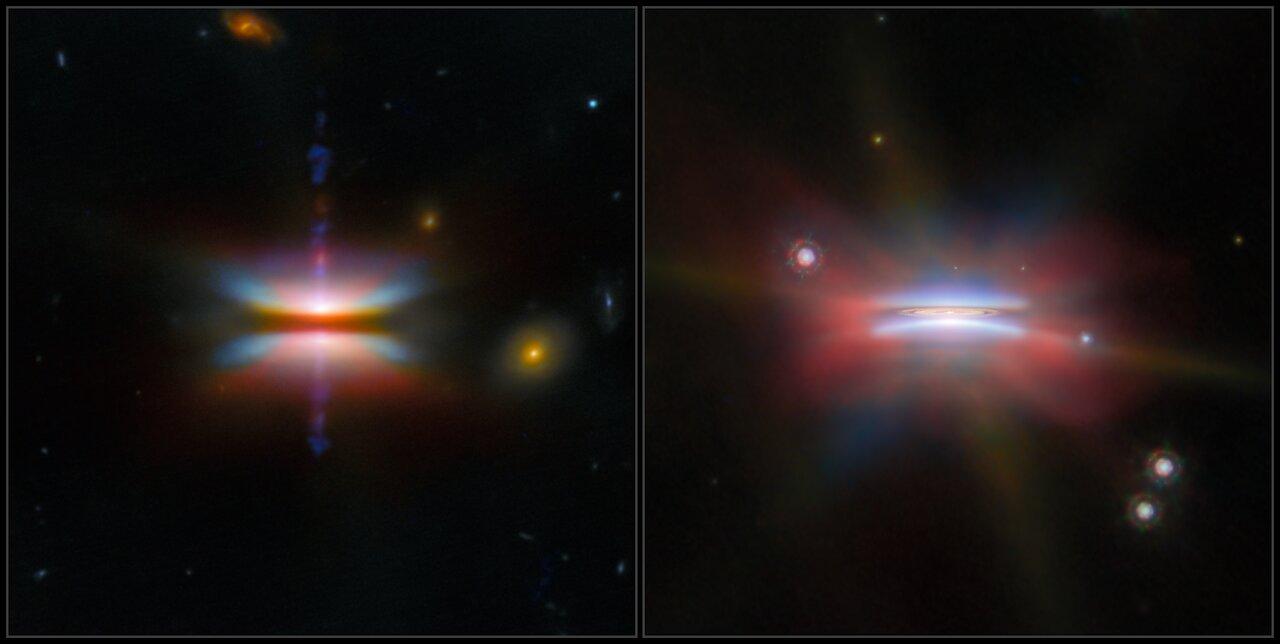
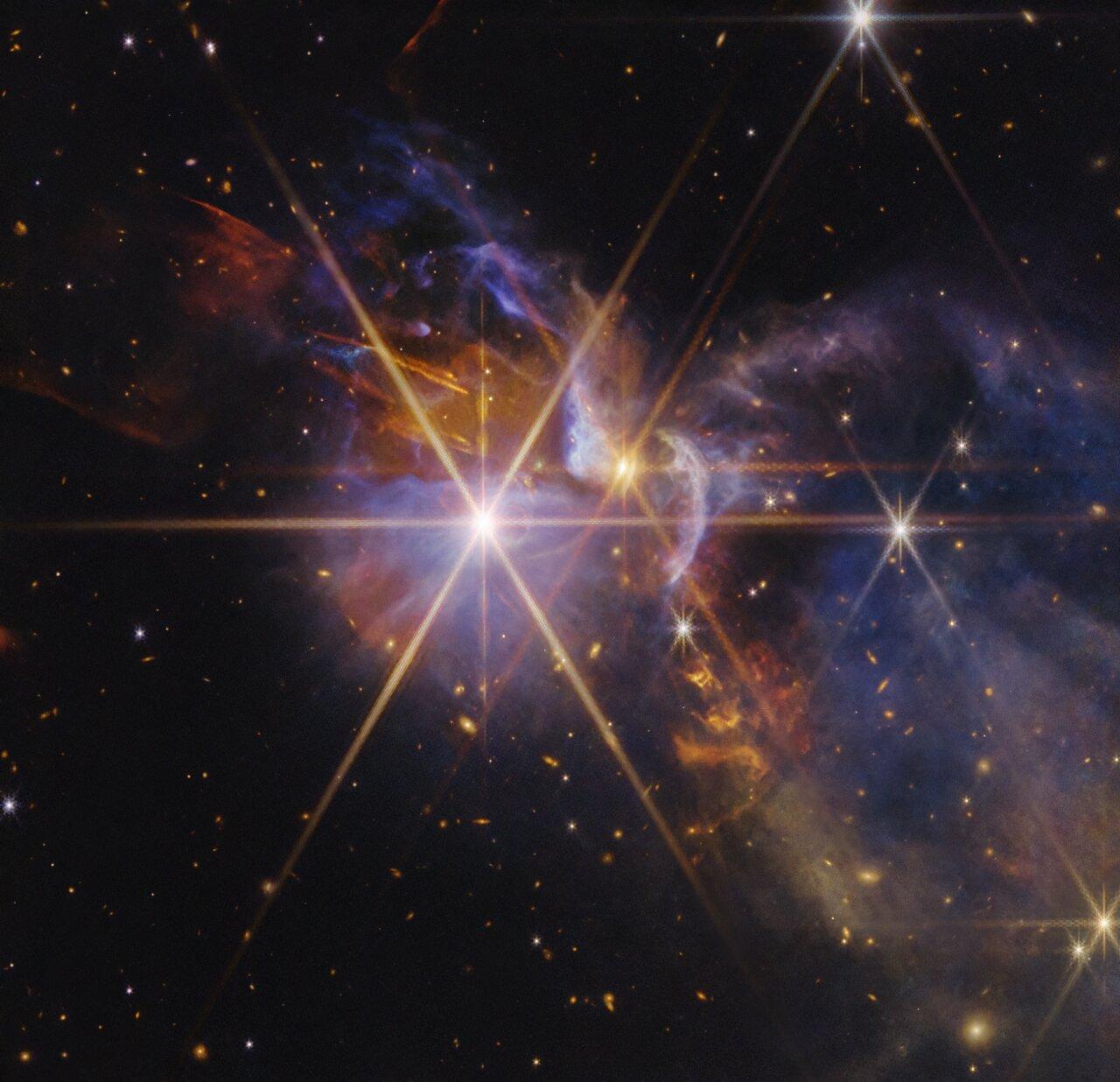
Both images also feature data from the NASA/ESA Hubble Space Telescope, which shows visible light, mainly from the central star reflected off the fine, floating dust. The image of Oph 163131 also includes observations from the Atacama Large Millimeter/submillimeter Array (ALMA). Where Hubble and Webb each image tiny dust grains only micrometres across, ALMA sees larger dust grains that are about a milimetre in size, which are concentrated in the central plane of the disc. This can create the right conditions for the grains to continue to grow and potentially form planets. Indeed, the ALMA data for Oph 163131 shows a gap in the inner disc, which may already be evidence of a planet forming and clearing out the dust around it.
Links Wide view of Oph 163131 Annotated close-up of Oph 163131 Image of Tau 042021 Image on ESA website Pan video Space Sparks episode Science paper (G. Duchêne et al.) Science paper (M. Villenave et al.) Science paper (M. Villenave et al.)
IMAGE CREDIT: ESA/Webb, NASA & CSA, ESA/Hubble, ALMA (ESO/NAOJ/NRAO), G. Duchêne, M. Villenave. CC BY 4.0