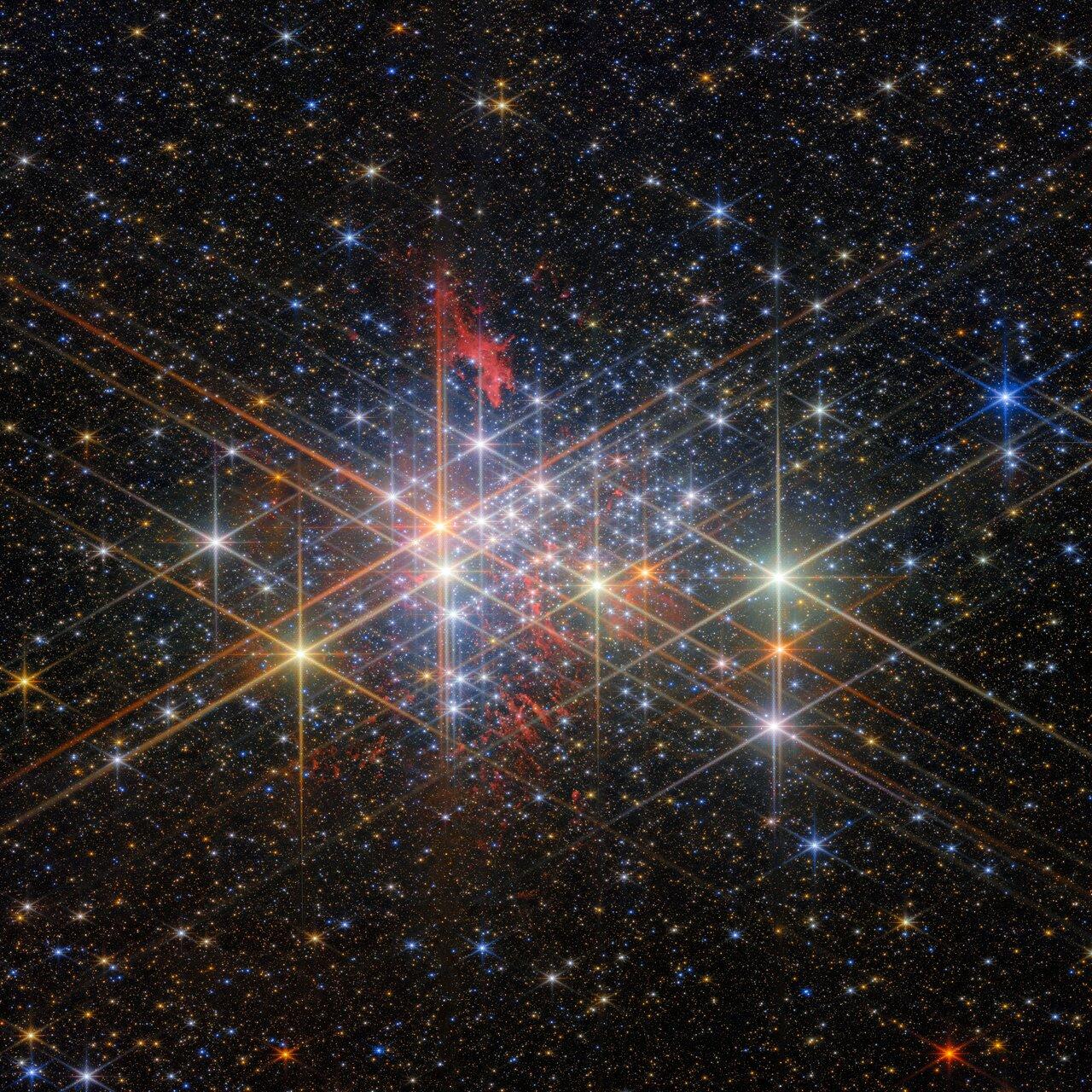
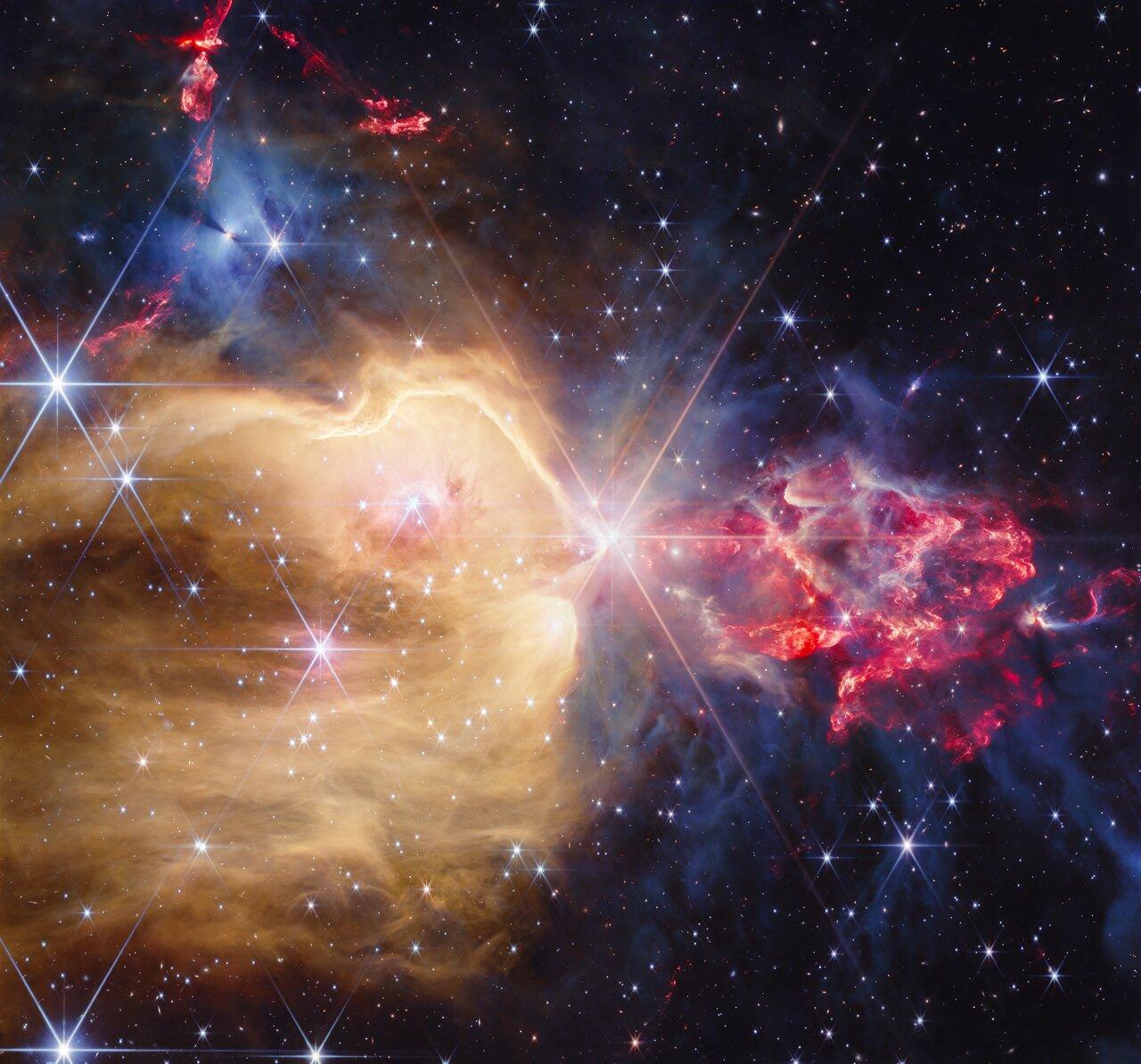
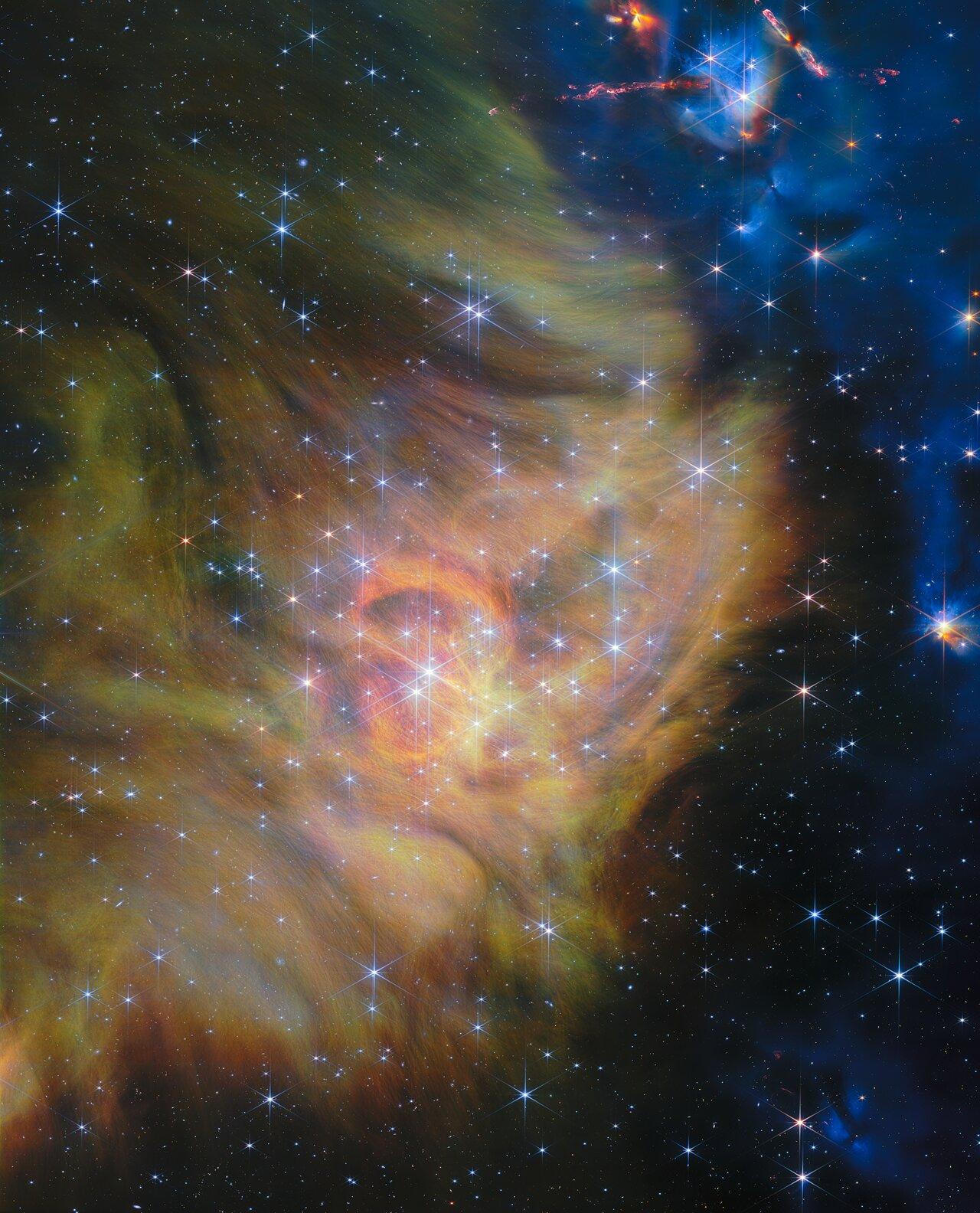
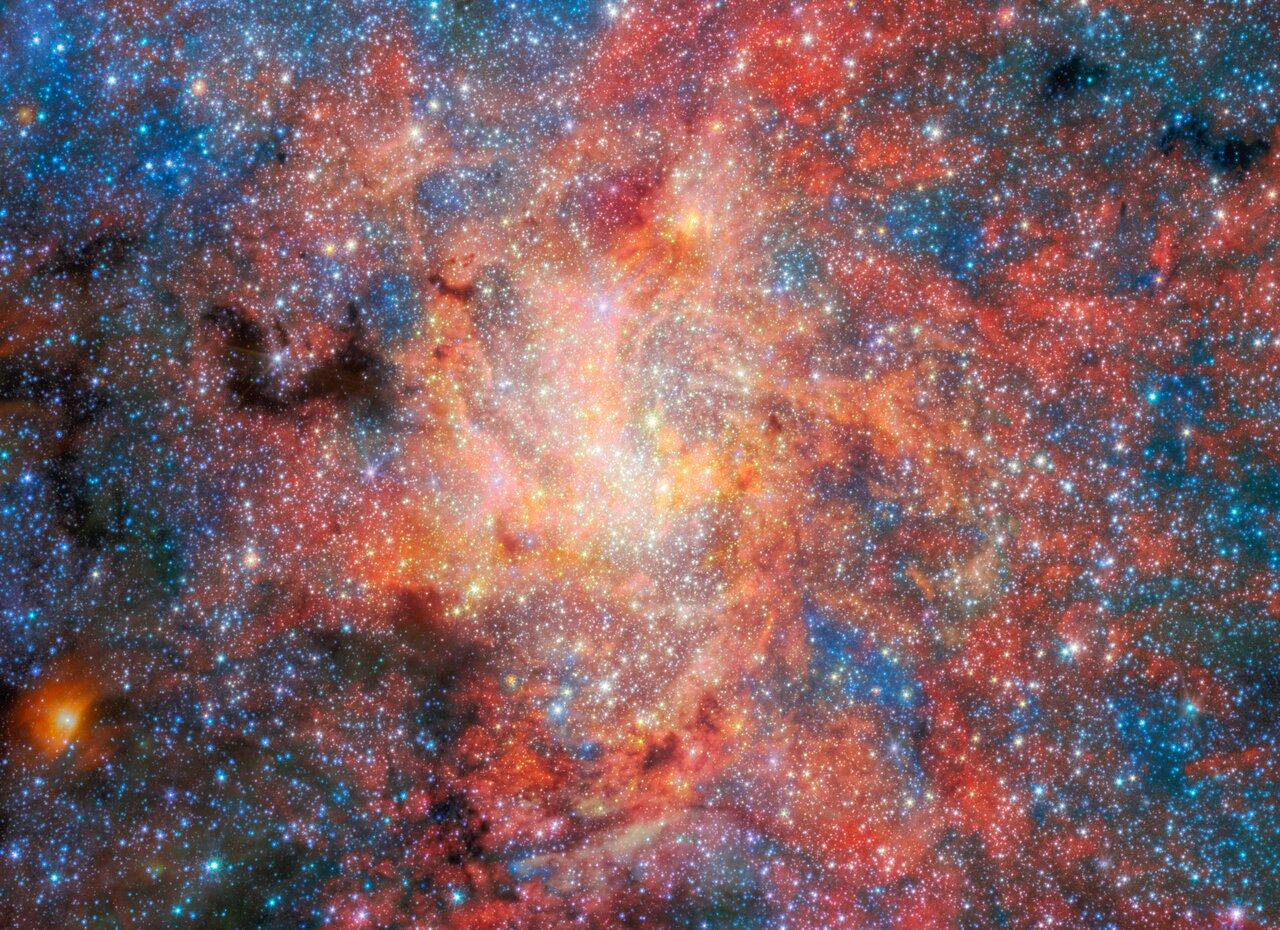
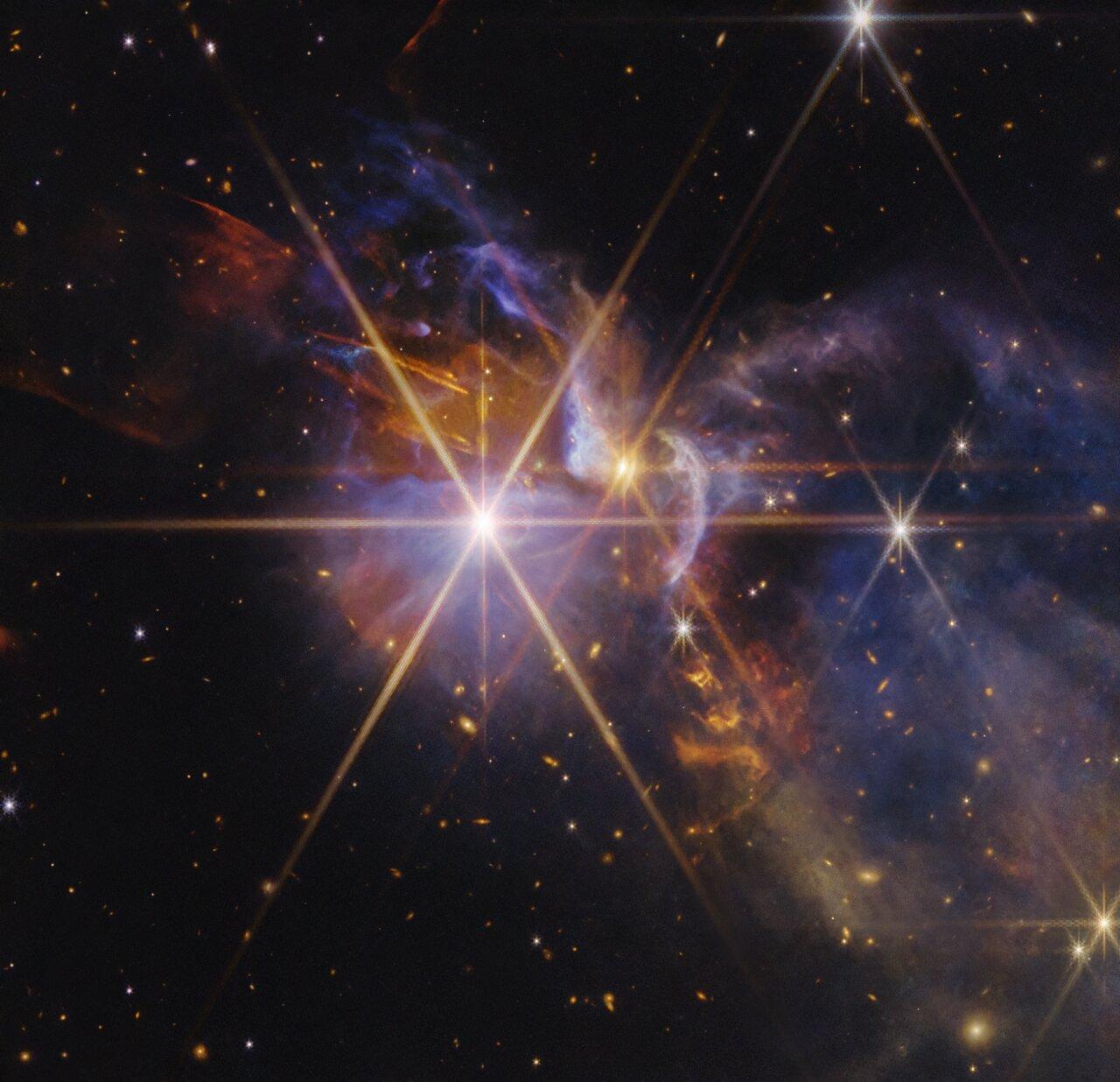
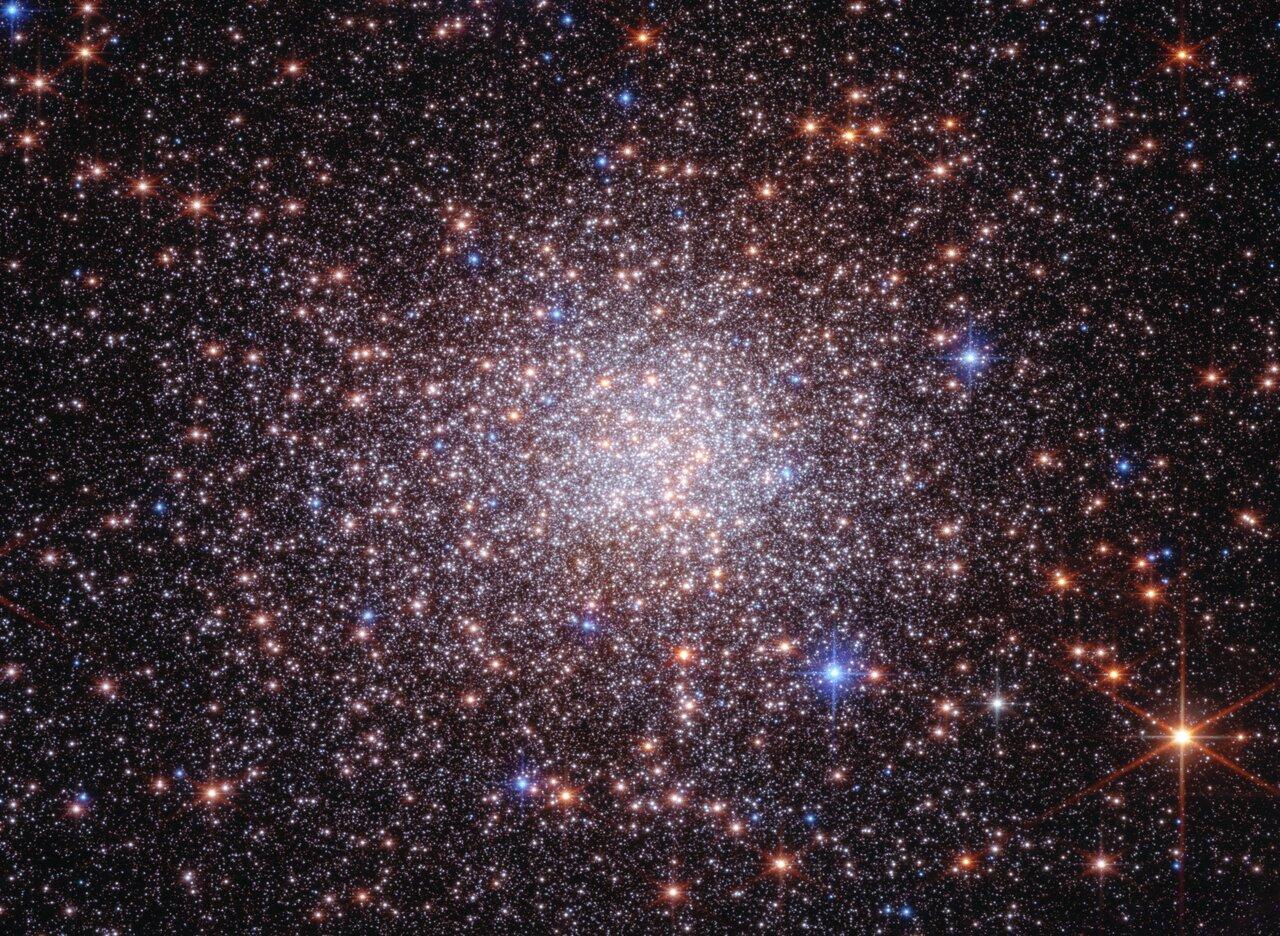
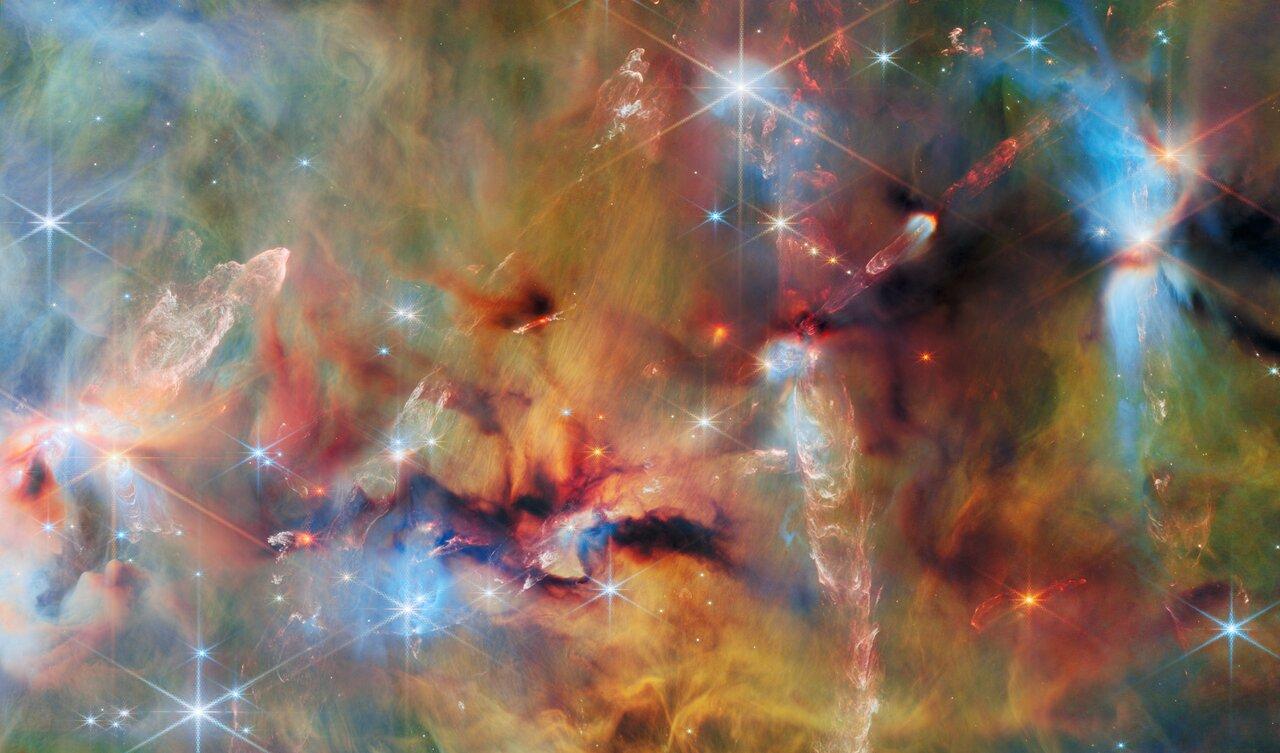
The huge population of massive stars in Westerlund 1 suggests that it will have a very significant impact on its surroundings. The cluster contains so many massive stars that in a time span of less than 40 million years, it will be the site of more than 1 500 supernovae. This super star cluster now provides astronomers with a unique perspective towards one of the most extreme environments in the Universe. Westerlund 1 will certainly provide new opportunities in the long-standing quest for more and finer details about how stars, and especially massive stars, form.
This image was captured as part of the The Extended Westerlund 1 and 2 Open Clusters Survey (EWOCS) with Webb’s Near-InfraRed Camera (NIRCam). This survey is a dedicated Webb program (GO 1905, PI: M. G. Guarcello) that aims to study star and planet formation and stellar evolution in starburst regions in Westerlund 1 and Westerlund 2, two of the closest super star clusters to the Sun.
With its unparalleled performance in the infrared, Webb offers astronomers the opportunity to unveil the population of low-mass stars in local super star clusters for the first time, and to study the environments around these clusters’ most massive stars. Webb observations of the massive stars in super star clusters can shed light on how feedback (stellar winds, supernovae and other ejected material) from these stars impacts their surrounding environments and the overall star formation process within their parental clouds.
Links
Westerlund 1 (cropped view) Pan Video: Westerlund 1
TELESCOPE / INSTRUMENT
wide-field view
IMAGE CREDIT: ESA/Webb, NASA & CSA, M. Zamani (ESA/Webb), M. G. Guarcello (INAF-OAPA) and the EWOCS team. CC BY 4.0