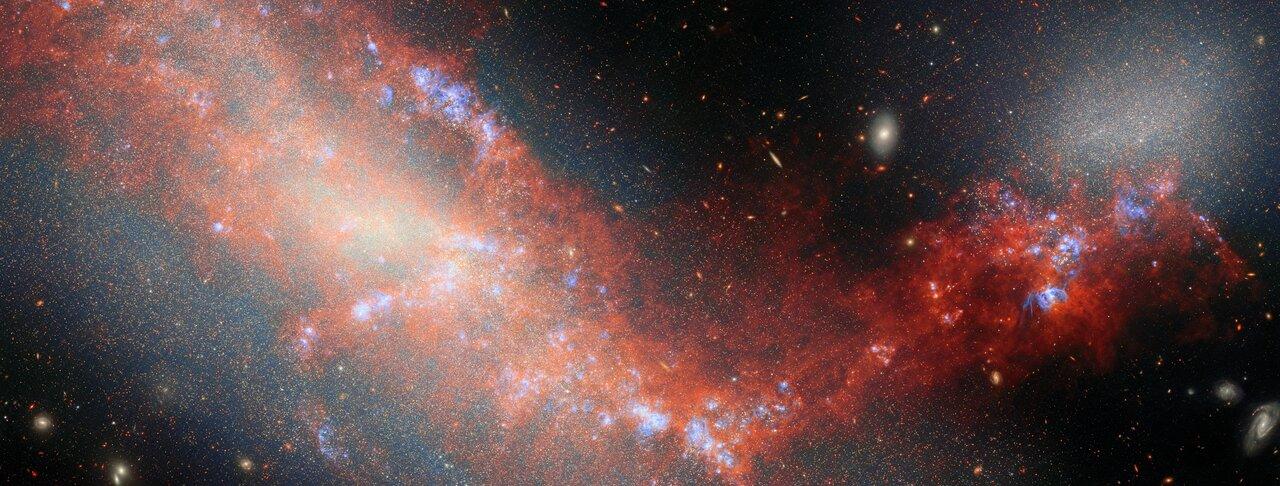
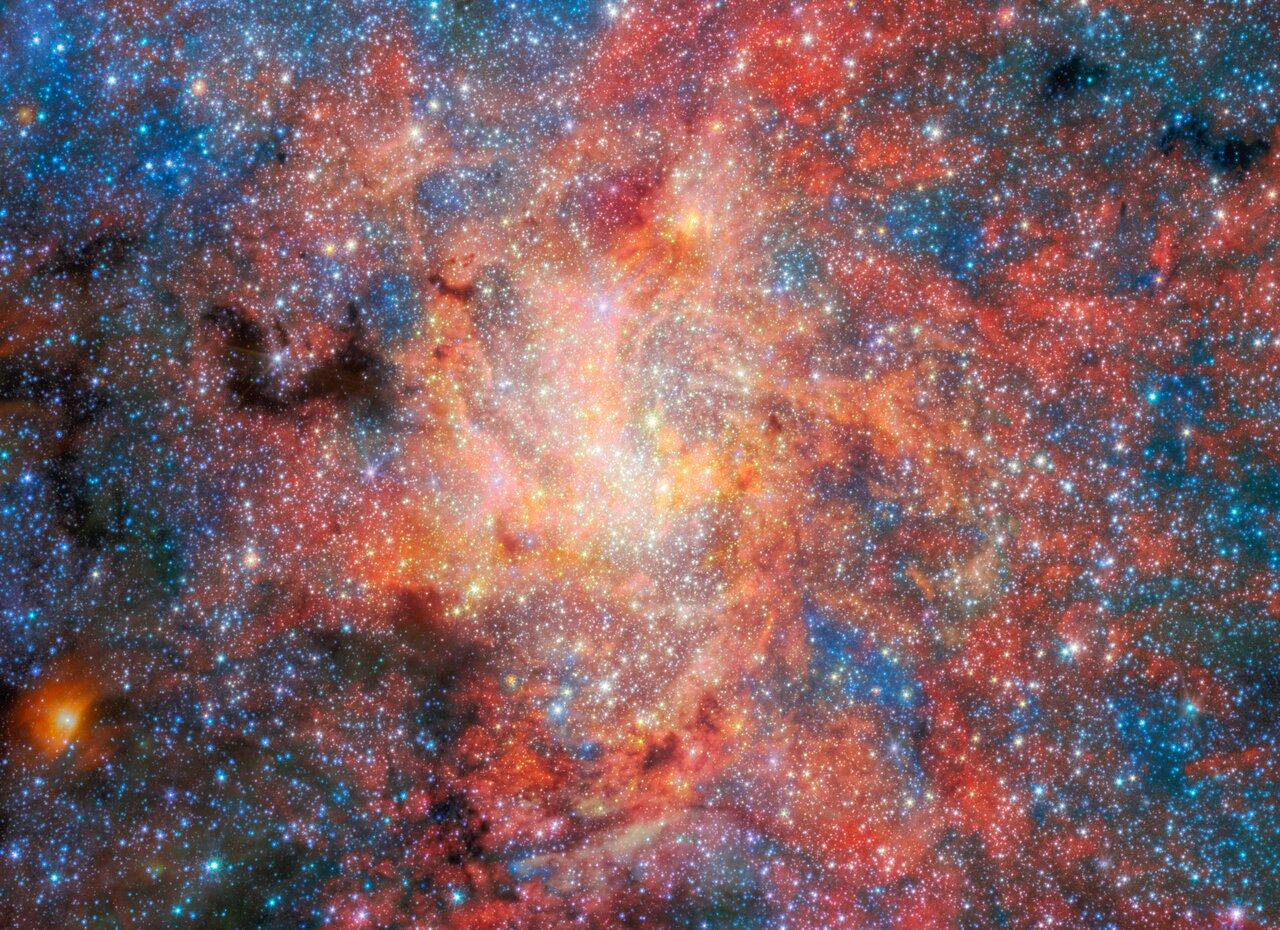
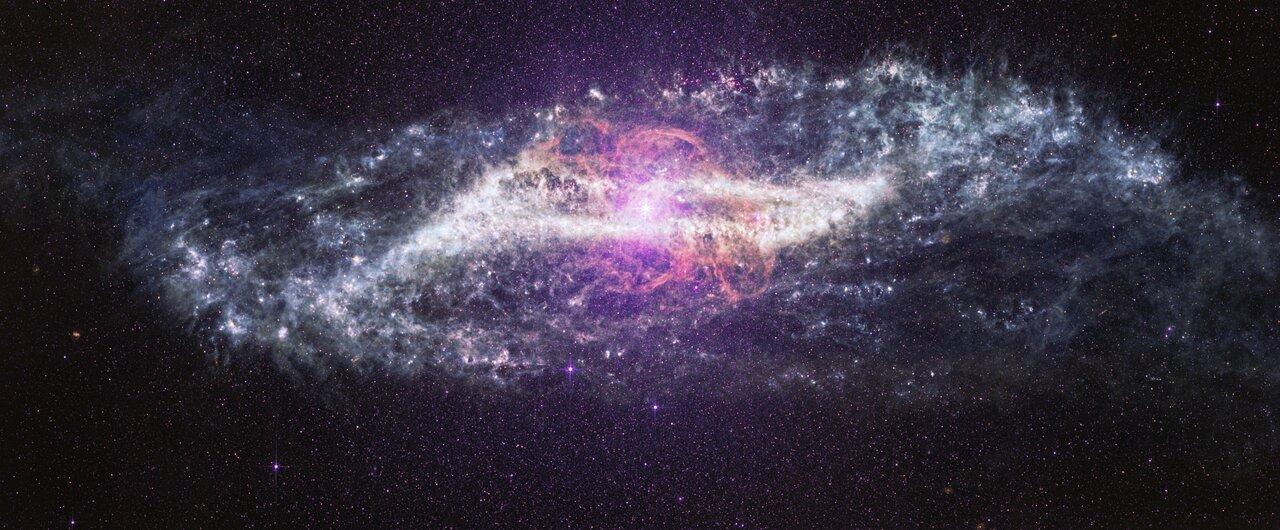
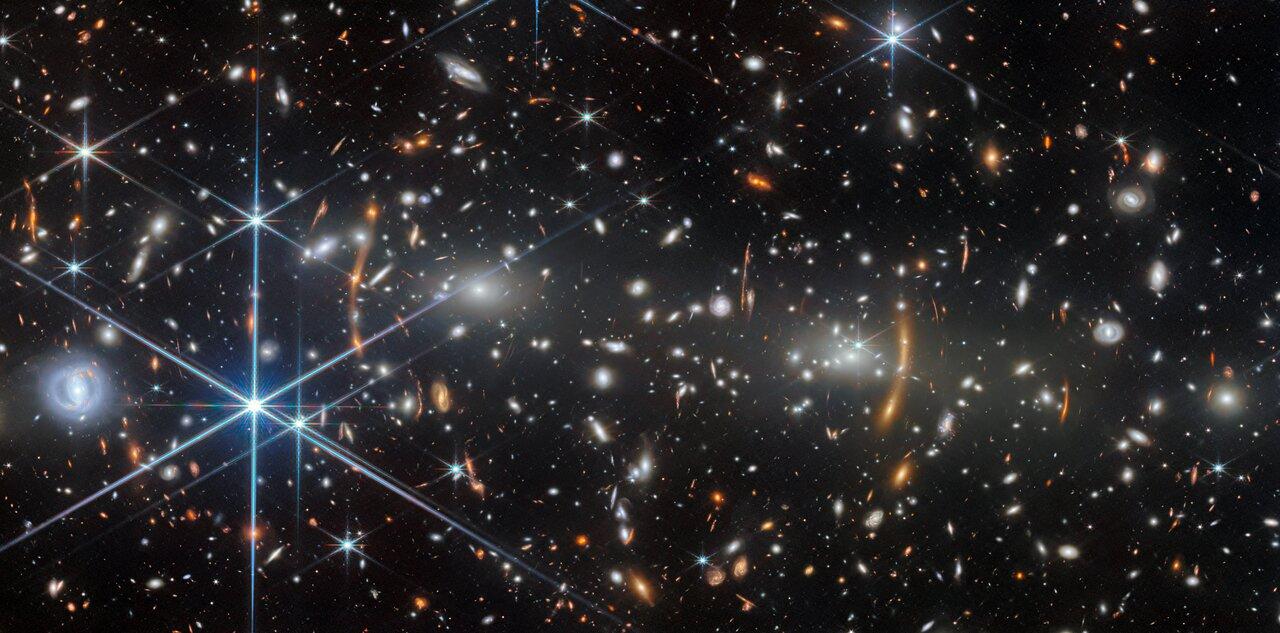
Roughly 200 million years ago, these galaxies whirled close to one another before waltzing away. The larger galaxy, NGC 4490, ensnared a stream of gas from its companion, and this gas now trails between the galaxies like dancers connected by outstretched arms. Along the newly formed bridge of gas and within the two galaxies, this interaction spurred a burst of new stars. The concentrated areas of bright blue that appear throughout the field indicate highly ionised regions of gas by the recently formed star clusters. Just 30 million years ago, these galaxies burst alight with stars once more, with new clusters coalescing where the gas of the two galaxies mixed together.
By capturing the history of the galactic dancers NGC 4490 and NGC 4485, Webb has revealed new details in how dwarf galaxies interact, giving us a glimpse of how small galaxies near and far grow and evolve.
Links: Science paper (G. Bortolini et al.) Pan Video Image on ESA website
IMAGE CREDIT: ESA/Webb, NASA & CSA, A. Adamo (Stockholm University), G. Bortolini, and the FEAST JWST team. CC BY 4.0