Loading photo
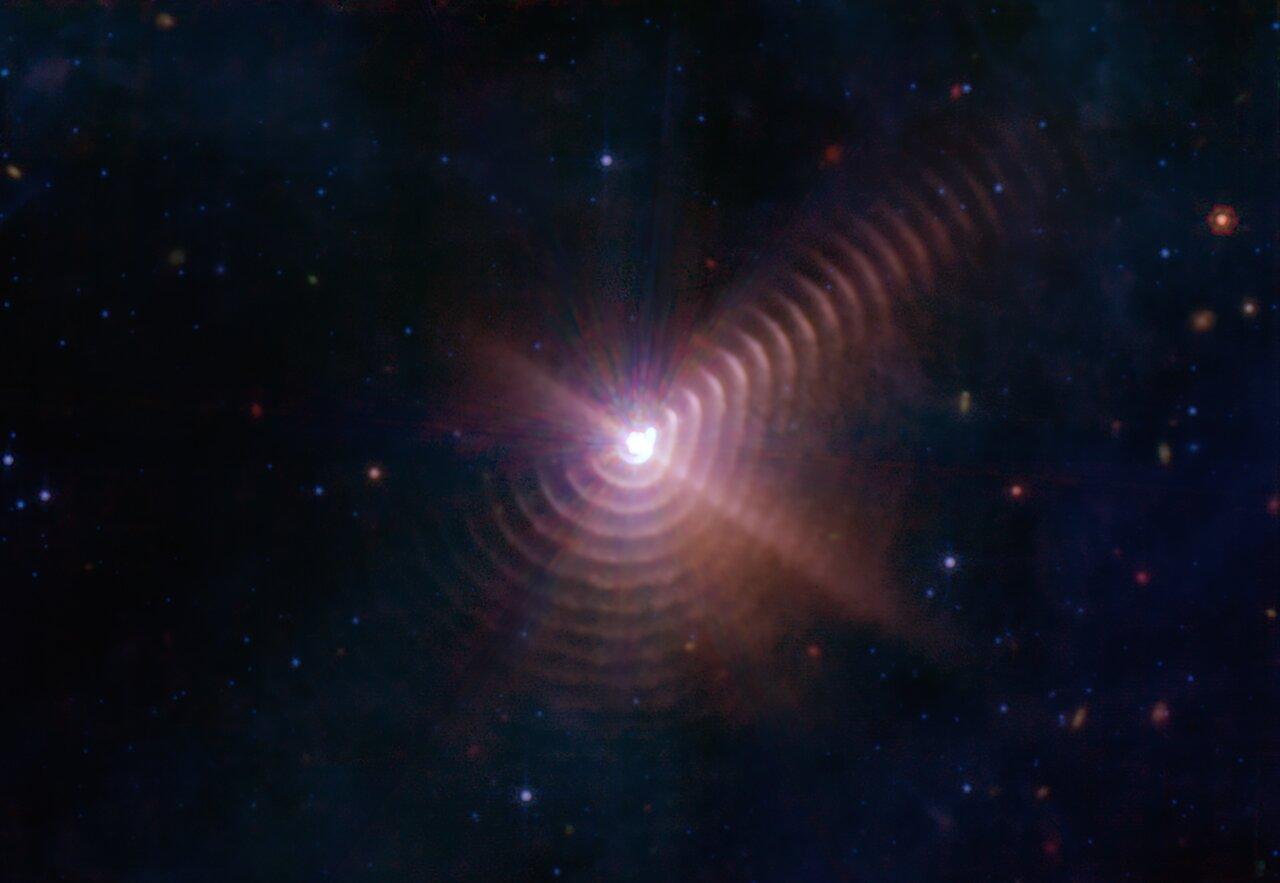
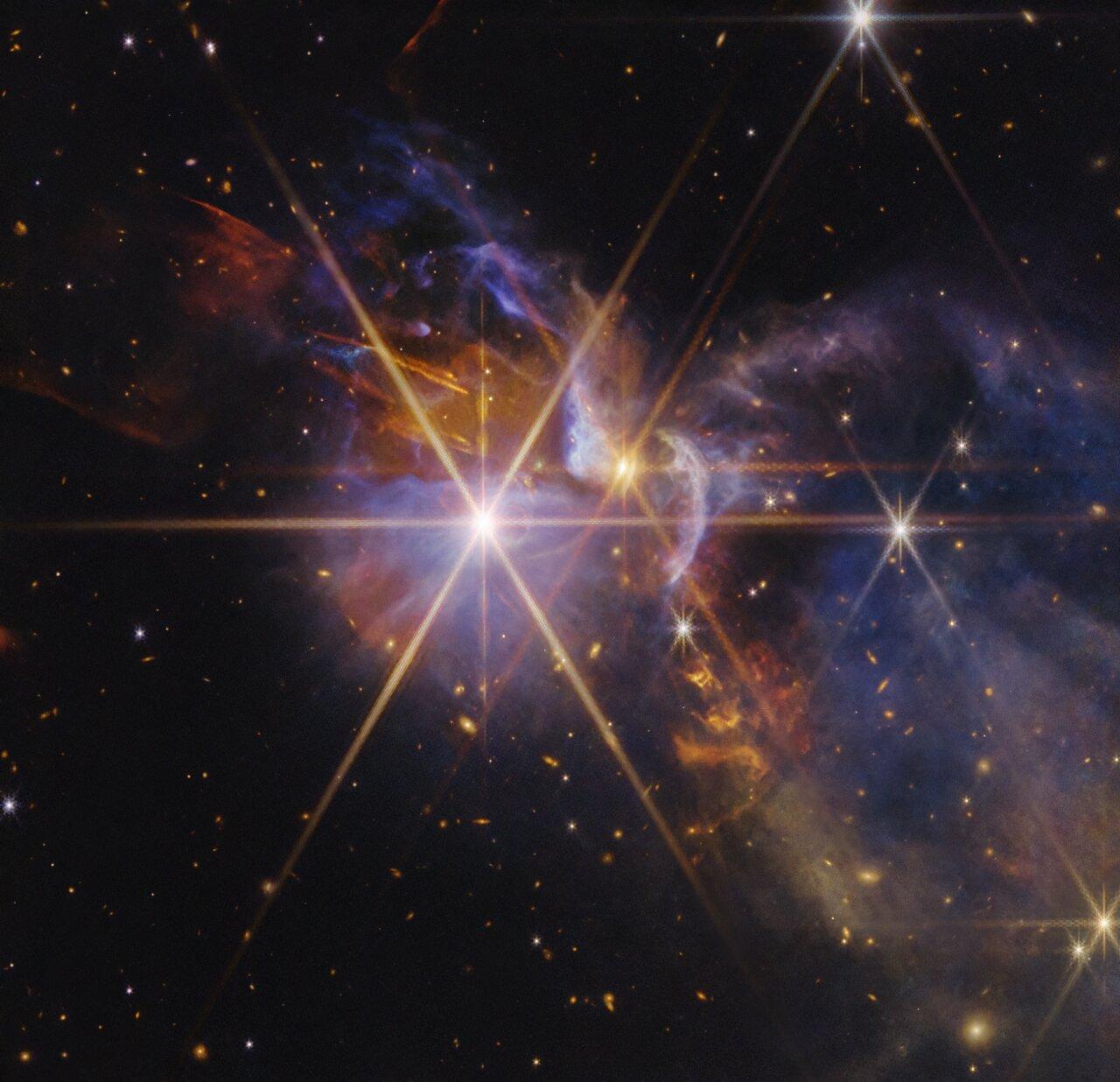
The science team thinks WR 140’s winds also swept the surrounding area clear of residual material they might otherwise collide with, which may be why the rings remain so pristine rather than smeared or dispersed. There are likely even more rings that have become so faint and dispersed, not even Webb can see them in the data.
Wolf-Rayet stars may seem exotic compared to our Sun, but they may have played a role in star and planet formation. When a Wolf-Rayet star clears an area, the swept-up material can pile up at the outskirts and become dense enough for new stars to form. There is some evidence the Sun formed in such a scenario.
Using data from MIRI’s Medium Resolution Spectroscopy mode, the new study provides the best evidence yet that Wolf-Rayet stars produce carbon-rich dust molecules. What’s more, the preservation of the dust shells indicates that this dust can survive in the hostile environment between stars, going on to supply material for future stars and planets.
The catch is that while astronomers estimate that there should be at least a few thousand Wolf-Rayet stars in our galaxy, only about 600 have been found to date.
These results have been published today in Nature Astronomy.
MIRI was contributed by ESA and NASA, with the instrument designed and built by a consortium of nationally funded European Institutes (the MIRI European Consortium) in partnership with JPL and the University of Arizona.
Links Video of Webb Finds Star Duo Forms ‘Fingerprint’ in Space
IMAGE CREDIT: NASA, ESA, CSA, STScI, JPL-Caltech. CC BY 4.0