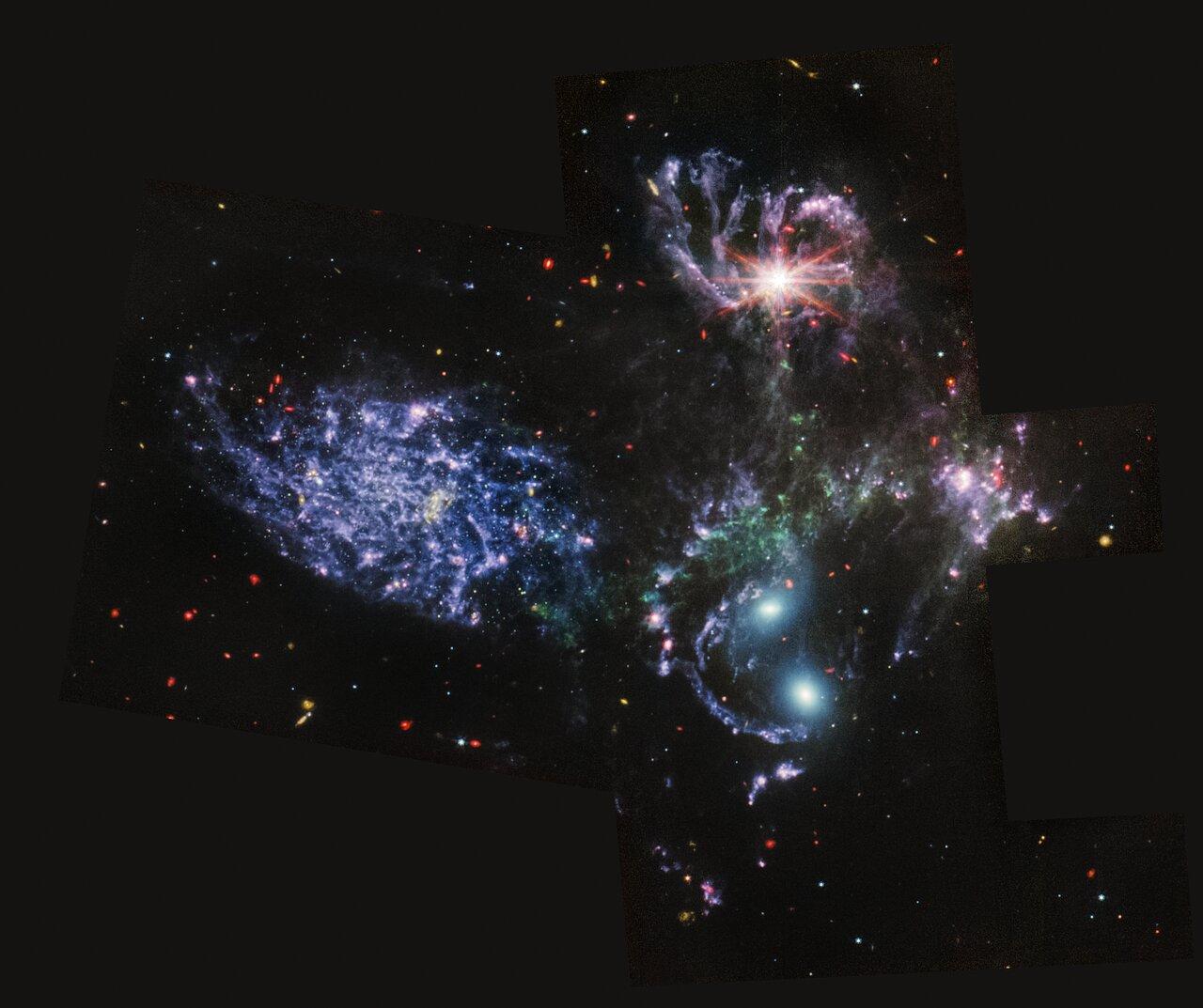
This proximity provides astronomers a ringside seat for witnessing the merging of and interactions between galaxies that are so crucial to all of galaxy evolution. Rarely do scientists see in so much exquisite detail how interacting galaxies trigger star formation in each other, and how the gas in these galaxies is being disturbed. Stephan’s Quintet is a fantastic “laboratory” for studying these processes fundamental to all galaxies.
Tight groups like this may have been more common in the early universe when their superheated, infalling material may have fueled very energetic black holes called quasars. Even today, the topmost galaxy in the group – NGC 7319 – harbours an active galactic nucleus, a supermassive black hole that is actively pulling in material.
MIRI was contributed by ESA and NASA, with the instrument designed and built by a consortium of nationally funded European Institutes (The MIRI European Consortium) in partnership with JPL and the University of Arizona.
TELESCOPE / INSTRUMENT
MIRI Imaging
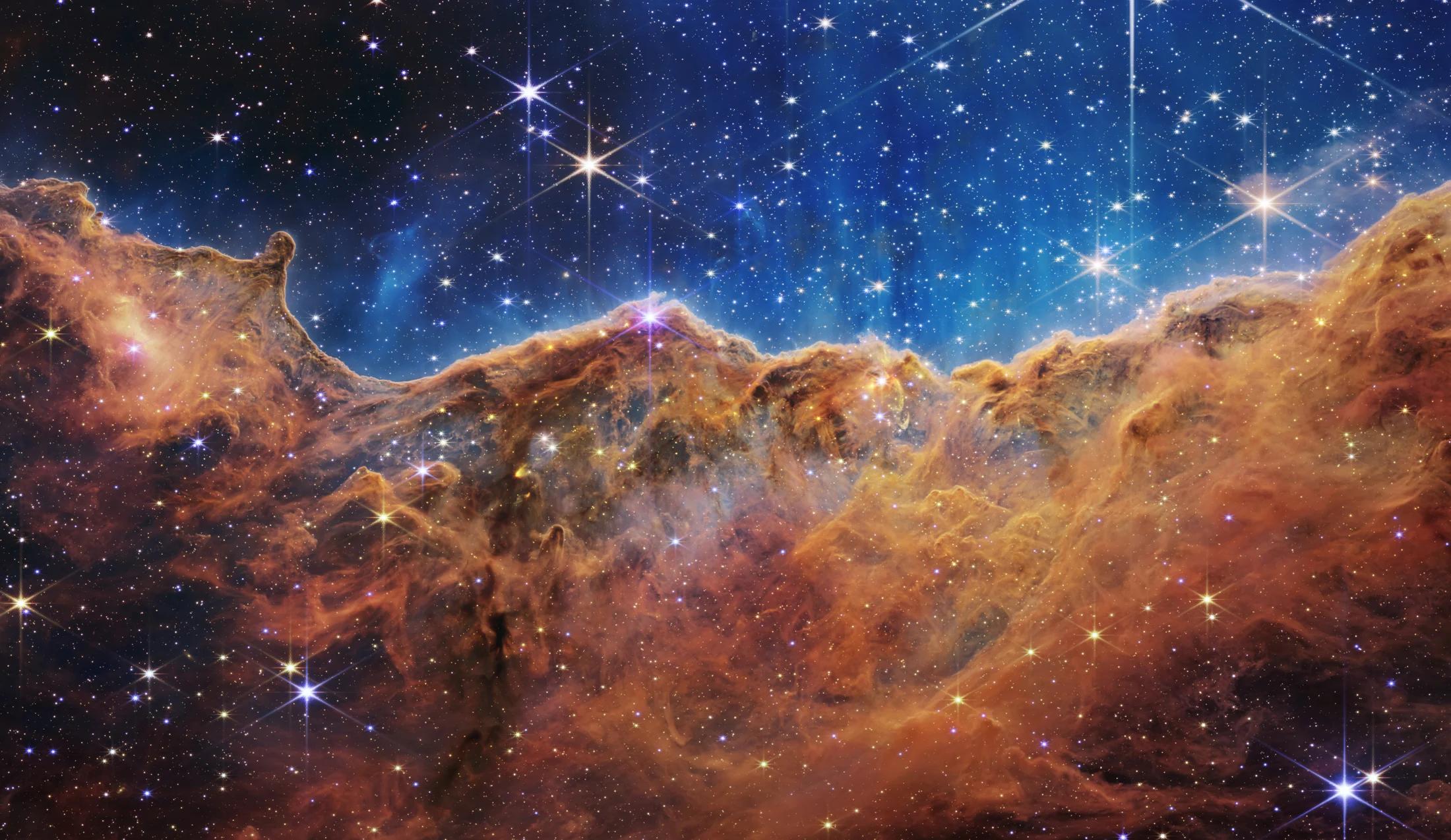
IMAGE CREDIT: NASA, ESA, CSA, and STScI. CC BY 4.0